
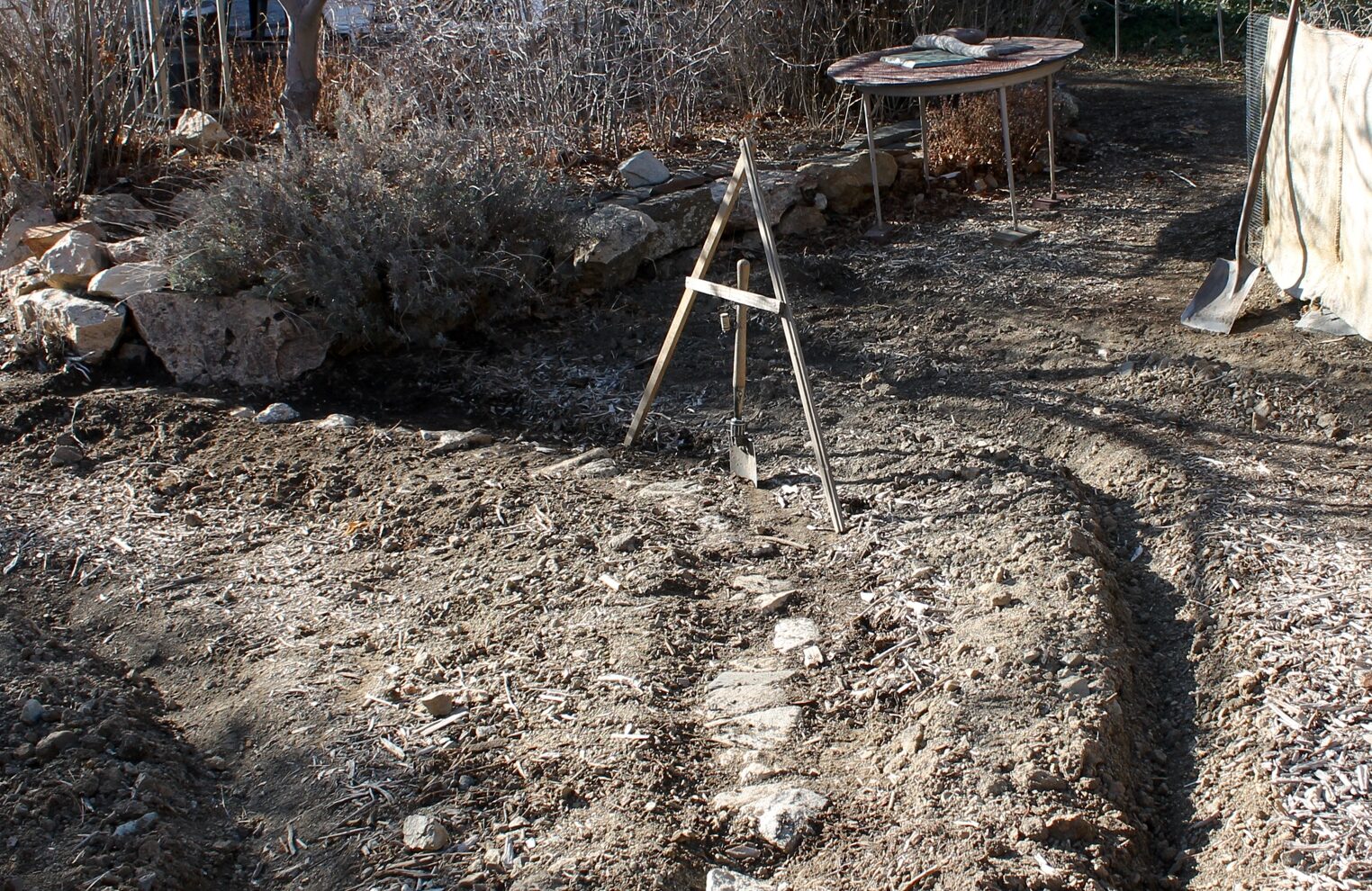

In dry climates burying sheet mulch under topsoil with stone bunding on the downslope contour extends hydrophilic conditions by settling water on contour and sheltering it from dry conditions. The tightly fitted, generally airless stones aligned down slope from buried sheet mulch allows sheet flow to pause, forcing the topsoil above the sheet mulch to exchange gas from the soil column, pulling moisture deeper into the soil and sheet mulch layer.
Local mycelium is encouraged into the space by the presence of an additional food source. The generally flat contour bottom allows the sheet of fibers to collect soil moisture from below, this also encourages rock worms to harvest minerals. In doing so the earth worms further aerate the lower region of the soil column. Red worms then inhabit the moist paper and mulch towards the surface. Red worms, rock works and mycelium all contribute together guided by the shaping of the contour and the physical connection of a food source.. The continual line of buried stone regulates Turgor pressure along the contour and worms in the soil help any additional moisture find a void so it can soak into the contour sheet mulch layer. In locations where vapor pressure deficit is common, burying the stones slightly deeper provides for better sustained Turgor pressure under VPD conditions.
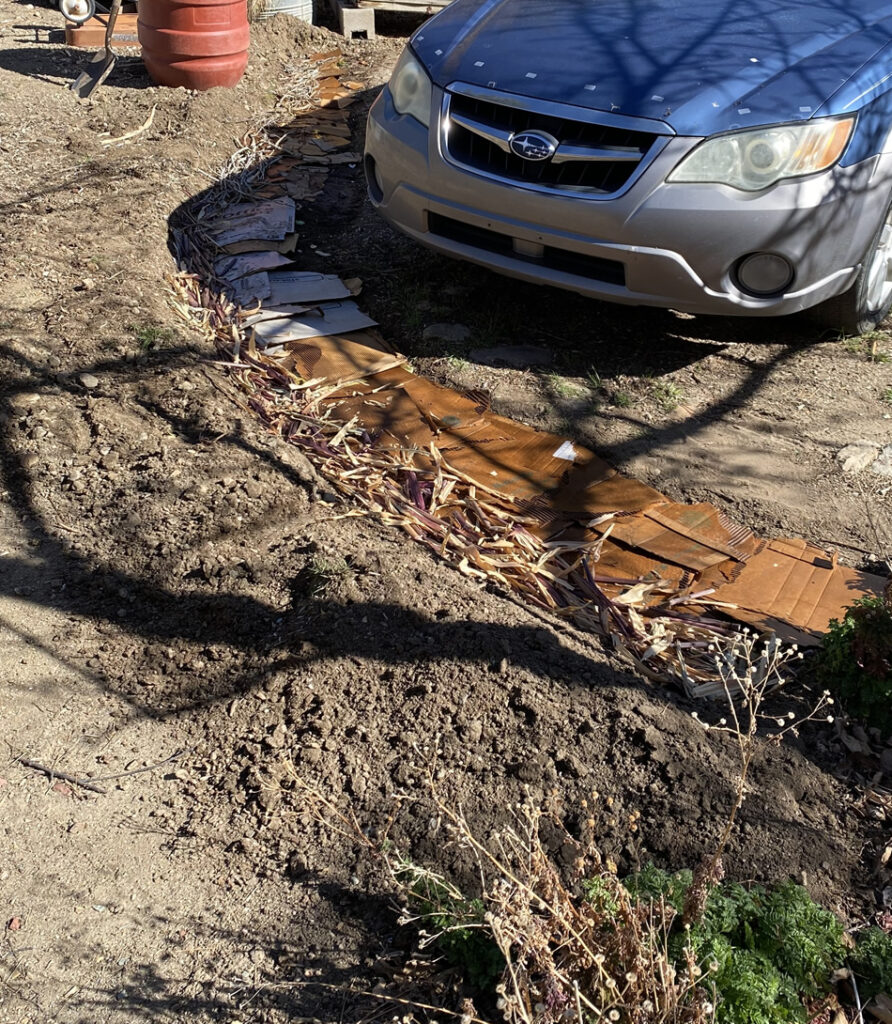
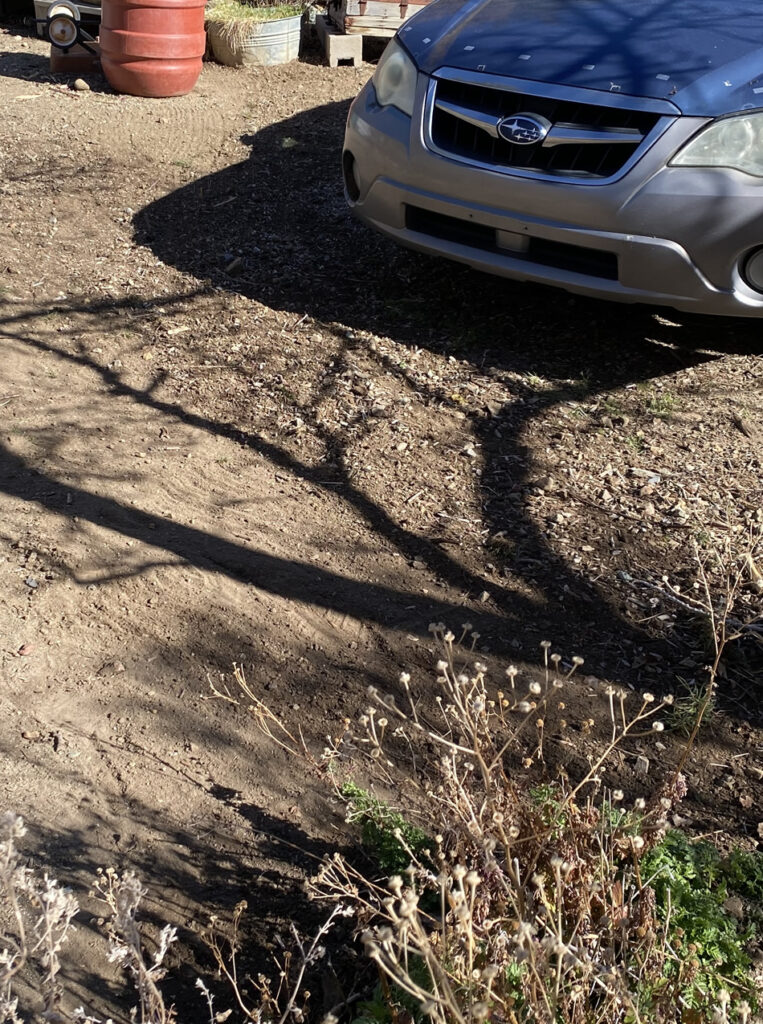
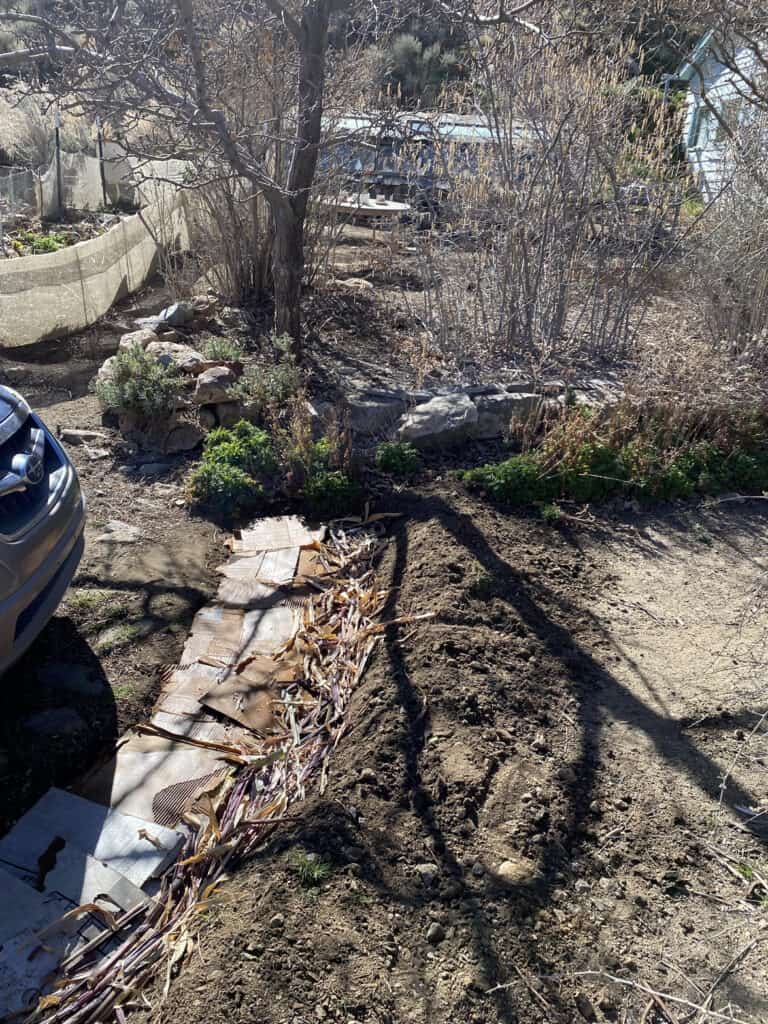
A potential enhancement to this combination is adding a vermitrench on contour which allows moisture to infiltrate even deeper, creating a much larger storage bank for water, nutrient and air that further extends the habitat for mycelium and redworms into deeper positions more insulated so they can thrive during cold or hot and dry conditions.
For information detailing Stone Bunds Click Here